Do You Need TMG With NMN? Probably Not
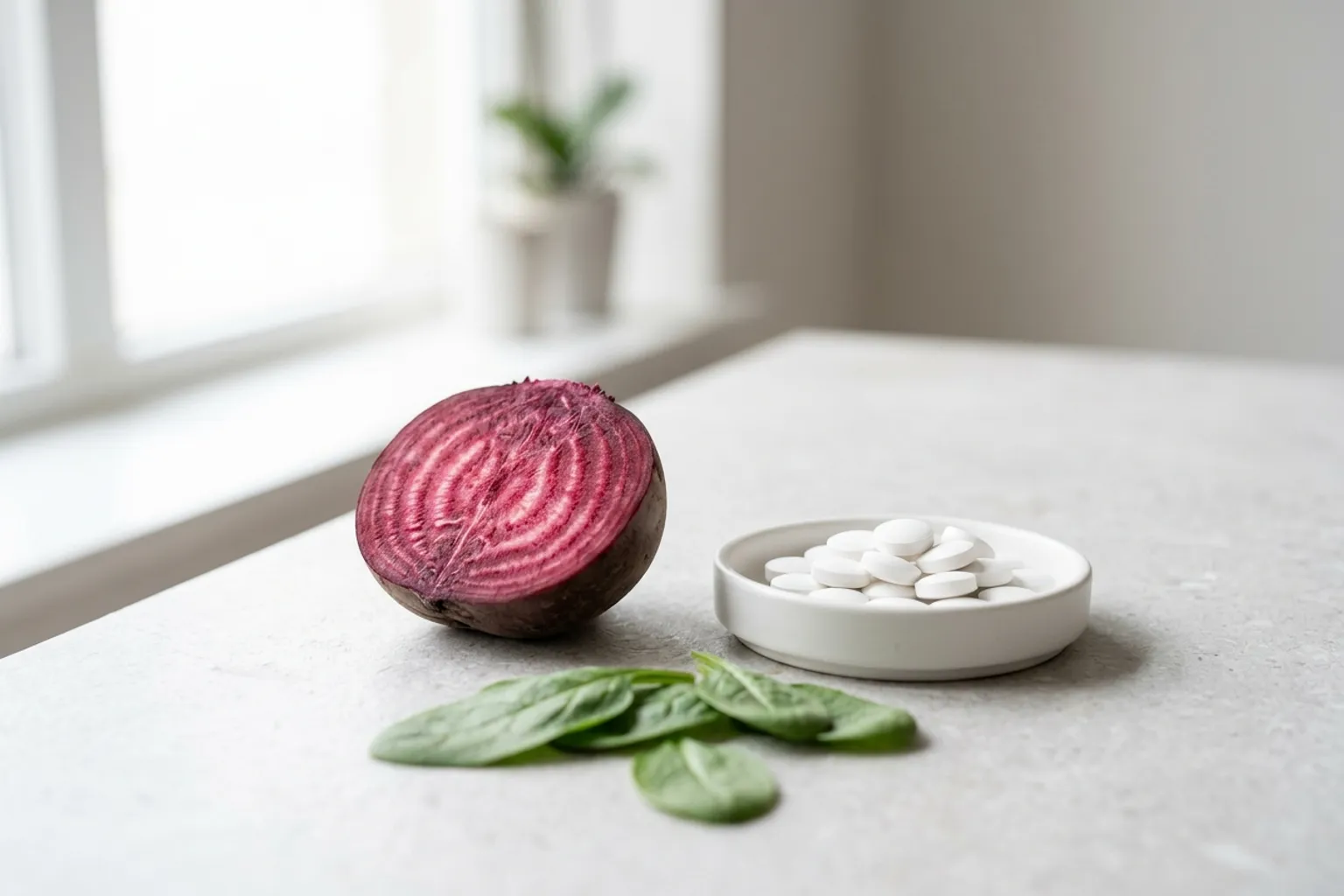
Open any NMN protocol online and you will hit the same instruction within a paragraph: stack it with TMG, because NAD+ precursors burn through your methyl groups. It is repeated so confidently that most people never ask whether anyone has actually measured it. So here is the honest answer to the question of whether you need TMG with NMN: probably not, and the reasons are worth walking through, because they say something about how supplement advice gets built.
The claim is not made up. It is a reasonable chain of biochemistry. The problem is that a reasonable chain of biochemistry is not the same as a demonstrated effect in a human being, and on this particular claim the trials that would settle it have never been run.
TMG itself is not useless. It has real, clean human data on one thing. That thing is not methylation support for NMN, and at the dose where it works it carries a cost the NMN crowd almost never mentions.
What Is TMG?
TMG stands for trimethylglycine, and it is the same molecule sold as betaine anhydrous. It was first isolated from sugar beet, which is where the word betaine comes from, and you also get it from spinach, wheat bran and quinoa. Chemically it is glycine carrying three methyl groups, and those methyl groups are the whole story.
Your body runs a constant recycling loop called the methionine cycle. Methionine donates a methyl group to build DNA, neurotransmitters and dozens of other molecules, and in doing so it turns into homocysteine. Homocysteine then has to be remethylated back into methionine, and there are two ways to do it: one uses folate and vitamin B12, the other uses betaine. When betaine hands over one of its methyl groups, homocysteine becomes methionine again and the loop closes.
That is the real mechanism, and it is why TMG lowers homocysteine. The NMN connection is a second inference laid on top of it. When your body clears the nicotinamide that NMN and NR generate, it methylates it, spending a methyl group drawn from that same cycle. The reasoning goes: more NAD+ precursor means more methylation means a drain on methyl donors means you need TMG to top them back up. Each link is plausible. Whether the drain is large enough to matter in a person taking a normal dose is an empirical question, and that is exactly where the evidence runs out.
The Science: Do You Need TMG With NMN?
Start with the claim that sells the stack, because the most important thing about it is what is missing. No human trial has shown that an NAD+ precursor depletes methyl donors in people, and no human trial has shown TMG correcting such a drain. The NMN studies that exist mostly did not even measure homocysteine or methylation markers, so there is no signal to point to in either direction. The advice to co-dose TMG is inference standing in for data. It is the same gap between a tidy mechanism and a proven human outcome that dogs a compound like fisetin, where the cell-culture logic is clean and the human trials simply are not there yet.
What TMG can genuinely do is lower homocysteine, and here the data is good.
It lowers homocysteine, dose by dose
- The Evidence: A placebo-controlled trial gave four groups of 19 healthy adults 1.5, 3 or 6 grams of betaine a day, or placebo, for six weeks. Fasting homocysteine fell by 12, 15 and 20 percent against placebo across the three doses, a clean dose-response.
- Read the study: Low Dose Betaine Supplementation Leads to Immediate and Long Term Lowering of Plasma Homocysteine in Healthy Men and Women
That is a solid result. The catch sits one layer up: lowering homocysteine is not the same as preventing anything. Homocysteine is a risk marker, and the large trials that pushed it down with B vitamins did not go on to cut heart attacks or strokes. So even TMG’s best-evidenced effect buys you a better number, not a proven outcome.
The catch nobody stacking it mentions
- The Evidence: The same research group pooled four randomized, placebo-controlled trials and looked at what betaine did to blood lipids. At 6 grams a day it raised LDL cholesterol by 0.36 mmol/L (95 percent confidence interval 0.25 to 0.46) and the total to HDL cholesterol ratio by 0.23, with HDL itself unchanged.
- Read the study: Effect of Homocysteine-Lowering Nutrients on Blood Lipids: Results from Four Randomised, Placebo-Controlled Studies in Healthy Humans
Read those two studies together and the picture is uncomfortable. The dose that clearly lowers homocysteine, 6 grams a day, is also the dose that clearly raises LDL. On a site that takes cardiovascular risk seriously, trading a better homocysteine number for a worse LDL number is not obviously a win, and it is the opposite of what someone stacking TMG for general health thinks they are buying.
Push the dose down and both effects fade
- The Evidence: A longer trial gave young, healthy adults a few grams a day for six months. It found no effect on the serum lipid profile and only a weak homocysteine-lowering effect, which tells you the response depends heavily on dose and on who is taking it.
- Read the study: Long-term effect of betaine on risk factors associated with the metabolic syndrome in healthy subjects
So the two effects are linked. Where TMG meaningfully lowers homocysteine, it tends to nudge LDL up. Where it leaves LDL alone, it barely touches homocysteine. There is no free dose that gives the benefit without the cost, at least not one the trials have found.
A Practical Guide: How to Use It
If your only reason for buying TMG is to protect methylation on NMN, the practical guidance is short: you are treating a problem no one has demonstrated. Most people on standard NMN or NR doses do fine without it, and there is no measured methyl-donor shortfall to correct in the first place. Save the capsule.
If you want TMG for homocysteine specifically, which is a real and separate reason, the trials point to 1.5 to 3 grams a day rather than 6. That range moved homocysteine in the dose-response study while staying below the dose that clearly disturbed lipids. A 1,000 mg tablet makes that easy to hit, and it is worth measuring homocysteine before and after rather than dosing on faith, since the whole point is a number you can actually check.
One label note: TMG, trimethylglycine and betaine anhydrous are the same thing. Do not confuse betaine anhydrous with betaine HCl, which is sold for stomach acid and is a different use entirely.
Safety and Advice
For most people TMG is well tolerated, and mild stomach upset is the most common complaint. The effect that deserves real attention is the one the lipid trial found: at gram doses, betaine raises LDL cholesterol and the total to HDL ratio. If you already have high LDL or known cardiovascular risk, that is a genuine reason to be cautious, and to keep the dose low if you use it at all.
Betaine is also used medically at much higher doses to treat a rare inherited disorder of homocysteine metabolism, which is a reminder that this is an active molecule, not an inert filler. Anyone pregnant, breastfeeding, or on treatment for a lipid or cardiovascular condition should talk to a clinician before adding it.
The Bottom Line
Stacking TMG with NMN to protect methylation solves a problem nobody has shown exists in people, and at the doses where TMG clearly does something, its clearest effect is to raise LDL. The homocysteine data is real, but a lower homocysteine number has not translated into fewer cardiovascular events, so even the good evidence buys less than it looks like.
If you are taking NMN, skip the reflexive TMG add-on and put the money elsewhere. If you specifically want to lower a high homocysteine reading, try 1.5 to 3 grams a day, check the number before and after, and keep an eye on your lipids while you do it.
This article is for educational purposes only and is not medical advice. Supplements can interact with medications and health conditions, so talk to a qualified healthcare provider before starting anything new.
Common questions
Do you need to take TMG with NMN?
For most people, no. The idea that NMN burns through methyl groups and needs TMG to replace them comes from biochemistry, not from a human trial. No study has shown an NAD+ precursor depleting methyl donors in people, and none has shown TMG preventing it.
What is a typical TMG dose?
The homocysteine trials used 1.5 to 6 grams a day. The effect on homocysteine grows with the dose, but so does the effect on LDL cholesterol, which becomes clear at 6 grams a day.
Does TMG have side effects?
At 6 grams a day it raised LDL cholesterol and the total to HDL cholesterol ratio in pooled trials. Some people report mild stomach upset. The homocysteine benefit and the lipid drawback tend to arrive together at gram doses.
Is TMG the same thing as betaine?
Yes. Trimethylglycine and betaine anhydrous are the same molecule, first isolated from sugar beet, which is where the name betaine comes from.