Does Oral Glutathione Survive Digestion? Both Studies Are Right
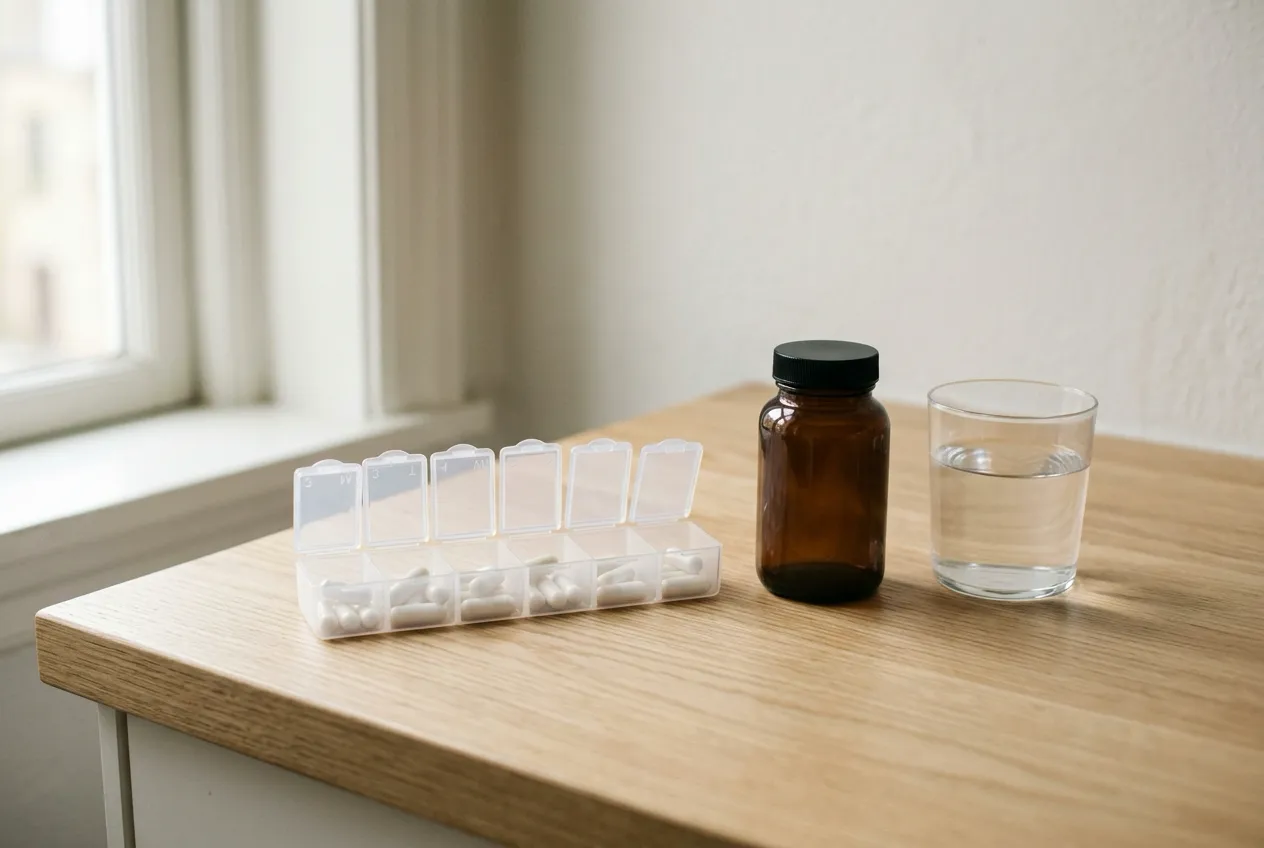
Ask whether oral glutathione survives digestion and you walk into an argument between two studies, both of them correct. One is quoted in nearly every article that tells you a glutathione pill is a waste of money and that you need the expensive liposomal kind. The other is quoted by almost nobody, and it is the one that actually tested taking the supplement for six months.
Reconciling them is the whole point of this article. The short version: a single capsule really does get taken apart in your gut, and taking glutathione every day for months really does lift the amount your body carries. Those two facts sound like they cancel out. They do not.
What Is Glutathione?
Glutathione is the body’s own master antioxidant, a small protein built from three amino acids: cysteine, glutamate, and glycine. Your cells make it themselves, and it does the unglamorous work of neutralizing reactive molecules before they damage DNA, proteins, and the mitochondria that power everything. Levels tend to drift down with age and under the strain of illness, pollution, and poor sleep.
The catch that makes supplementing it interesting is structural. Glutathione is a tripeptide, meaning the three amino acids are chained together by peptide bonds. Your digestive tract is very good at breaking peptide bonds, because that is how it handles every protein you eat. So the obvious worry is that a glutathione capsule gets dismantled into its parts long before it reaches your bloodstream intact. That worry is not wrong. It is just incomplete.
This is the same reason the more familiar move is to supply a precursor instead and let the body assemble glutathione itself, which is the entire case for NAC as a glutathione raw material. Taking the finished molecule by mouth is the harder path, and the debate below is about whether it works anyway.
The Science: Does Oral Glutathione Survive Digestion?
Two human studies define this question, and they were designed to measure completely different things. Reading them as a pair is what sorts out the confusion.
The single dose study that built the myth
- The Evidence: Seven healthy volunteers each took a single oral dose of about 3 grams of glutathione. Over the next 270 minutes, blood levels of glutathione, cysteine, and glutamate did not rise significantly. The authors pinned the failure on gamma-glutamyltransferase, an enzyme in the intestine and liver that hydrolyzes the tripeptide, and concluded that systemic availability from a single oral dose is negligible in man.
- Read the study: The systemic availability of oral glutathione
This is a clean, believable result, and it is the source of the whole “it does not absorb, so buy liposomal” consensus you see repeated across supplement blogs. What gets lost is the word single. The study measured one dose over a single afternoon. It says nothing about what happens if you take glutathione every day for half a year, because it never tried.
Six months of daily dosing tells a different story
- The Evidence: A six month randomized, double blind, placebo controlled trial gave 54 healthy non smoking adults either 250 mg or 1,000 mg of glutathione a day, or placebo. At six months the high dose group had glutathione up 30 to 35 percent in red blood cells, plasma, and lymphocytes, and up about 260 percent in the cells lining the cheek. The 250 mg group saw smaller rises, around 17 percent in whole blood. The increases were dose and time dependent, and after a one month washout, levels fell back to baseline.
- Read the study: Randomized controlled trial of oral glutathione supplementation on body stores of glutathione
That washout detail is quietly the most convincing part. Levels climbed while people supplemented and dropped once they stopped, which is exactly the pattern you would expect from a real effect rather than noise. And here is the fact the marketing skips: this trial used plain reduced glutathione, the ordinary non liposomal form, the same kind sold cheaply on the shelf. The absorption argument that sells you a liposomal upgrade rests on the single dose study, not on the study that actually showed daily dosing works.
So both papers are right. A single dose does not raise circulating glutathione, because the enzyme gets to it first. Sustained daily dosing raises the body’s stores anyway, probably by feeding the cysteine and other building blocks back into your own glutathione synthesis over time. Different question, different answer.
The immune marker that moved with it
- The Evidence: In the same six month trial, natural killer cell cytotoxicity, a measure of how aggressively certain immune cells attack their targets, more than doubled in the high dose group compared with placebo by the three month mark. Like the glutathione levels, it tracked with dosing rather than standing alone.
- Read the study: Randomized controlled trial of oral glutathione supplementation on body stores of glutathione
This is a single functional marker in one modestly sized trial, not proof that glutathione capsules make you sick less often. Treat it as a plausible downstream signal rather than a clinical outcome. It matters here mainly because it moved in step with the glutathione levels, which strengthens the case that something real was happening in the body and not just in a lab assay.
A Practical Guide: How to Use It
If you decide to try oral glutathione, the studies point to a specific way to do it, and it is not the way most people buy it.
First, take it daily and give it time. The evidence for a benefit comes from months of consistent use, not from a loading dose you feel in an afternoon. Nothing in the research supports the idea of a quick hit.
Second, be honest about the dose. The headline 30 to 35 percent rise came from 1,000 mg a day. A common capsule, including the one linked here, is 500 mg taken once daily. That sits between the two trial arms and below the dose that produced the biggest numbers, so calibrate your expectations to it rather than to the 1,000 mg result. If you want to match the high dose arm, that is two capsules.
Third, do not pay up for liposomal on the strength of the digestion scare. The trial that raised body stores used the plain reduced form. Liposomal glutathione has its own small studies, but the single dose absorption study that gets used to sell it is not evidence that the cheaper form fails over months. Worth knowing: the commentary that ran alongside the six month trial, arguing the liposomal case, was written by someone from a company that sells liposomal glutathione. That does not make the argument wrong, but it is context the sales pages leave out.
If your actual goal is simply more glutathione and you do not mind how you get there, feeding the body a precursor is the cheaper and better studied route, whether that is cysteine by way of NAC or prompting your own cells to make more through the Nrf2 pathway that sulforaphane activates.
Safety and Advice
Glutathione has a reassuring safety profile at supplement doses. In the six month trial the supplement was well tolerated, with no pattern of serious side effects, and the amounts on the shelf are modest compared with what the body already handles. A faint sulfur smell from the capsules is normal and comes from the cysteine, not from spoilage.
The usual cautions apply. Data in pregnancy and breastfeeding is thin, so those groups should skip it unless a doctor advises otherwise. If you have a chronic condition or take prescription medication, run it past a clinician first, as a matter of routine rather than because of any specific known interaction. And keep the expectation grounded: raising a blood marker is not the same as a proven health outcome, and glutathione supplements are not a treatment for any disease.
The Bottom Line
Does oral glutathione survive digestion? A single pill mostly does not, and a six month habit of taking it does raise your body’s stores anyway. Both of the studies people fight over are correct, because they asked different questions. The practical upshot is that plain reduced glutathione, taken daily for months, has real human evidence behind it, and the pricey liposomal version is sold largely on a study that tested one dose over one afternoon.
If you want to try it, buy the plain form, take it every day, and judge it over months. A single 500 mg capsule is a reasonable starting point, with the honest caveat that the strongest results in the trial came from twice that.
This article is for educational purposes only and is not medical advice. Supplements can interact with medications and health conditions, so talk to a qualified healthcare provider before starting anything new.
Common questions
Does oral glutathione survive digestion?
A single dose mostly does not. The classic study found no meaningful rise in blood glutathione after one 3 gram dose, because a gut enzyme splits the molecule apart. But six months of daily dosing did raise the body's glutathione stores, so the honest answer depends on whether you take it once or for months.
Do you need liposomal glutathione for it to work?
Not according to the trial that matters. The six month study that raised glutathione stores used plain reduced glutathione, not a liposomal version. The liposomal upgrade is usually sold on the single dose study, which is not the study that showed daily supplementation works.
How long does oral glutathione take to work?
Months, not days. The trial measured rising levels at three and six months, and the immune marker it tracked improved by three months. Levels fell back to baseline about a month after people stopped, so it is an ongoing habit rather than a short course.
How much oral glutathione should you take?
The trial used 250 or 1,000 mg a day. The headline 30 to 35 percent rise in blood glutathione came from the 1,000 mg group. The 250 mg group saw a smaller rise. A common 500 mg capsule sits between the two, so do not expect the 1,000 mg result from it.