Should You Take Lithium Orotate? Not Yet
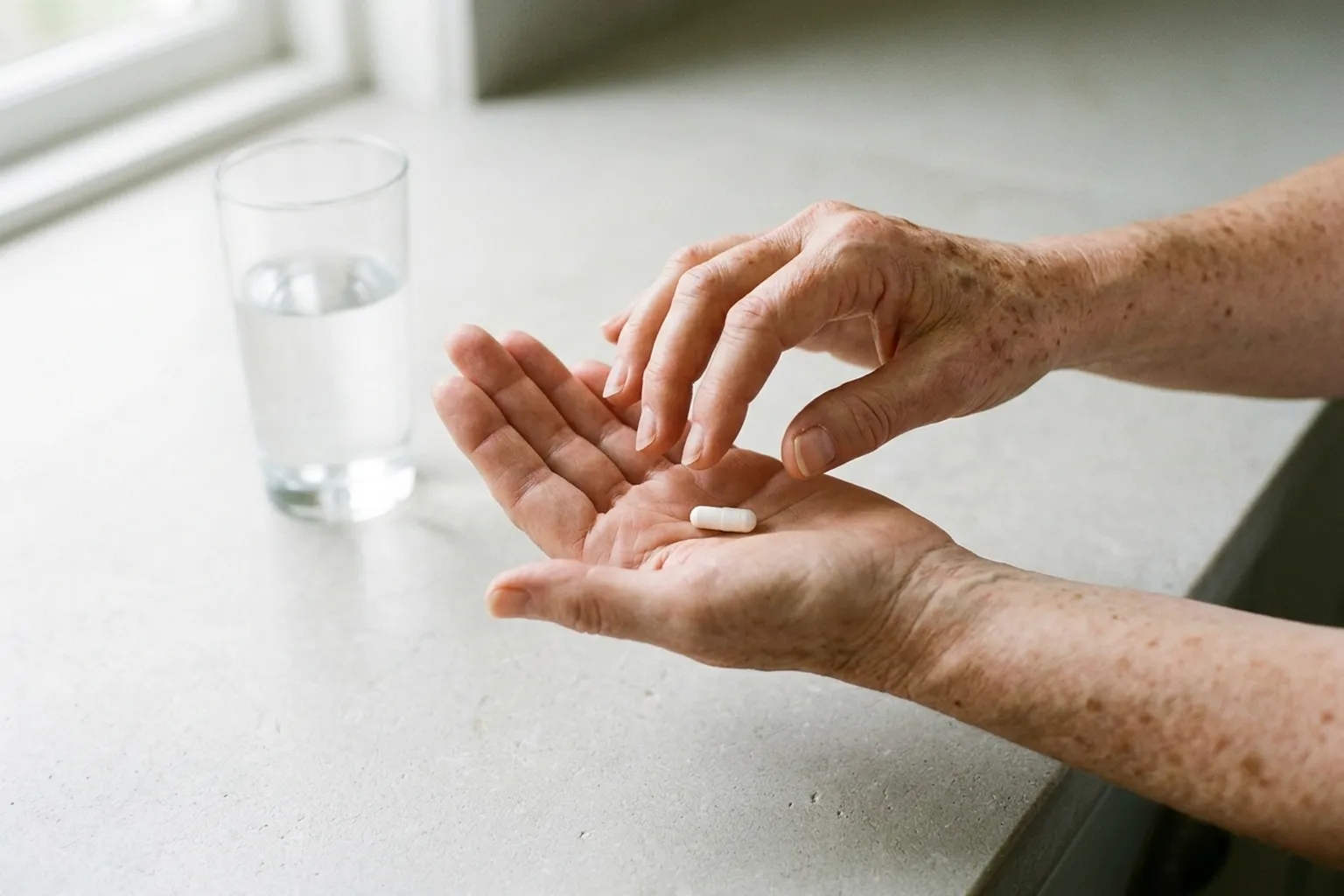
If you are asking whether you should take lithium orotate, the honest answer starts with one paper published in August 2025. A Harvard team reported that lithium, the same metal used to treat bipolar disorder, is a natural part of the brain, that it runs low early in Alzheimer’s disease, and that a specific lithium salt reversed the damage in mice. That is the finding that set off the 2026 run on lithium supplements.
It is an exciting result. It is also mouse work plus human tissue under a microscope, with no human outcome trial behind it. The gap between those two things is the whole story here.
What Is Lithium Orotate?
Lithium is a trace element, and it turns up in small amounts in drinking water and some foods. Your brain holds a little of it, and until recently almost nobody thought of it as something the body actively manages.
Lithium orotate is lithium bound to orotic acid, sold as a low dose supplement. This is not the drug your psychiatrist prescribes. Prescription lithium carbonate delivers well over a hundred milligrams of elemental lithium a day and demands regular blood tests, because the dose that steadies mood sits close to the dose that harms the kidneys. A capsule of lithium orotate carries around 5 mg of elemental lithium, a fraction of that. The orotate marketing claims it crosses into cells more efficiently, but the human data behind that claim is thin.
The mechanism people point to is an enzyme called GSK3β. Lithium dampens it, and an overactive GSK3β is one of the things that drives the tangles of tau protein seen in Alzheimer’s. That link is old. What changed in 2025 was the evidence putting the brain’s own lithium at the center of the disease.
The Science: What Can It Actually Do?
The case for lithium orotate rests on three pieces of evidence. Two are strong and come from animals and cadaver tissue. One is human, and it is very small. Keeping those apart is the point.
A Nature paper put lithium deficiency at the center of Alzheimer’s
The paper that started everything is the reason this compound is on shelves in 2026, so it is worth being precise about what it measured.
- The Evidence: Researchers led by Liviu Aron in Bruce Yankner’s lab at Harvard analyzed metals in the prefrontal cortex of people who had died with mild cognitive impairment and Alzheimer’s, compared with cognitively healthy controls. Of all the metals they screened, lithium was the only one significantly reduced in the impaired brains. They found amyloid plaques were binding the lithium up, and that levels inside the plaque regions ran far above the tissue around them, which suggests the plaques pull lithium out of circulation as the disease starts.
- Read the study: Lithium deficiency and the onset of Alzheimer’s disease
This is human data, but of a particular kind. It is a snapshot of tissue from people who have already died, showing an association between low brain lithium and disease. It cannot tell you that topping lithium back up in a living person changes anything. For that, the same team turned to mice.
Depleting lithium harmed mouse brains, and lithium orotate reversed it
The mouse half of the paper is where lithium orotate specifically enters the picture, and it is the most quoted result.
- The Evidence: When the researchers cut the brain’s own lithium by about 50 percent in mice, amyloid-β deposition and phospho-tau accumulation both jumped, microglia turned inflammatory, synapses and myelin were lost, and cognition declined faster, effects they traced in part to that GSK3β pathway. Then they treated Alzheimer’s-model mice with lithium orotate, chosen because it slips past the amyloid plaques that trap ordinary lithium. At tiny physiological doses it lowered plaque, shifted gene expression back toward normal, and restored memory, even when treatment started at a later stage of the disease.
- Read the study: Lithium deficiency and the onset of Alzheimer’s disease
Read that carefully, because it is the sentence the supplement ads are built on. A lithium salt reversed Alzheimer’s-like damage in a mouse. That is a strong reason to run a human trial. It is not the same as a reason to take the supplement, any more than the mouse lifespan data made fisetin a proven human longevity treatment. The register is identical: convincing in mice, unproven in people.
The only microdose trial in people is a small, old pilot
There is exactly one study that gave a microdose of lithium to people with Alzheimer’s and watched what happened, and it is worth knowing how small it is.
- The Evidence: A Brazilian pilot gave patients 300 micrograms of elemental lithium a day for 15 months. The treated group held steady on the mini-mental state exam while the placebo group declined, with a difference emerging around three months in.
- Read the study: Microdose Lithium Treatment Stabilized Cognitive Impairment in Patients with Alzheimer’s Disease
A stable score against a declining one sounds impressive, and it may be real. But this was a small pilot that reported unusually little about its methods and participants, and no one has repeated it in the years since. A single unreplicated trial with sparse reporting is a lead to chase, not a foundation to dose yourself on. It is also a very different dose from what people are actually buying, which brings us to the practical problem.
A Practical Guide: Should You Take Lithium Orotate Yet?
The honest practical answer is that nobody knows the right dose, and the numbers do not line up.
A capsule on the shelf holds about 5 mg of elemental lithium. The one human microdose study above used 300 micrograms, roughly a sixteenth of that. The Nature mouse work used amounts smaller still, physiological traces meant to restore a natural level rather than flood the brain, which is why Yankner’s group has stressed the effective dose was a tiny fraction of a psychiatric one. So the two doses with evidence behind them, the pilot’s 300 micrograms and the mouse study’s physiological traces, both sit well below the 5 mg in the bottle, and neither has been validated as the dose a person should take for brain aging.
The trial everyone is pointing to has not started yet. LiO-AD (NCT07459959) is a phase 1/2 study of oral lithium orotate in people with biomarker-confirmed early Alzheimer’s, run by Johns Hopkins with NIH funding and listed as not yet recruiting with an estimated start of October 2026. It is a modest one: a planned 40 participants, randomized double blind against a matched placebo, nine weeks of treatment. Its primary questions are feasibility, safety and tolerability, kidney and thyroid function among them. Whether the supplement raises lithium in the spinal fluid is a secondary outcome, alongside delayed recall, so memory is measured but this is not the study that will tell you whether it works. The dose is worth noticing too: it titrates up to 720 mg of lithium orotate a day, about 30 mg of elemental lithium, roughly six times what is in the capsule on the shelf. So the shelf dose sits in a gap, well above the only amount ever shown to help a person and well below what the trial is about to test. When the first human trial of a compound has yet to establish that it is safe or that it reaches the brain at all, self-dosing ahead of it is guessing.
This is the same discipline worth applying to the whole shelf of promising-but-early longevity compounds, from the honest read on ergothioneine to the senolytics. The mechanism can be the most interesting thing in the field and the supplement can still be premature.
Safety and Advice
The frightening lithium stories, the kidney damage and the thyroid problems, come from prescription doses many times higher than a supplement, taken for years. At 5 mg the acute risk is low. That is the reassuring part, said plainly so the caution below reads as caution rather than alarm.
The real issue is that lithium interacts with common drugs regardless of the salt. NSAIDs like ibuprofen, thiazide and loop diuretics, and some blood pressure medications can all raise how much lithium your body holds onto. Combining lithium with an SSRI antidepressant carries a serotonin risk. Lithium can also nudge the thyroid toward underactivity and, over time, tax the kidneys. On a prescription, a doctor tracks all of this with regular blood tests and a target serum range. On an over the counter capsule, nobody is checking your serum lithium at all, which is the quiet problem with treating a metal that has a narrow safety window like a vitamin. Anyone pregnant or breastfeeding should avoid it, and anyone on the medications above should talk to a doctor first.
The Bottom Line
Lithium and brain aging is the most interesting story in the longevity field right now, and that is exactly why it is worth waiting for human evidence rather than guessing at a dose. The Nature paper is strong science: low brain lithium tracks with Alzheimer’s in human tissue, and a lithium salt reversed the damage in mice. What does not yet exist is a single human outcome trial, an agreed dose, or any monitoring on the doses people are buying.
If brain aging is what worries you, the levers with real human evidence are still the unglamorous ones: sleep, exercise, and keeping blood pressure in range. Watch the LiO-AD trial, but know what it can and cannot answer: on its own estimated schedule it does not finish until 2029, and it is built to show whether the supplement is safe and reaches the brain, not whether it protects memory. That is how early this is.
This article is for educational purposes only and is not medical advice. Supplements can interact with medications and health conditions, so talk to a qualified healthcare provider before starting anything new.
Common questions
Should you take lithium orotate for brain health?
Not yet. The evidence that made it famous is a 2025 mouse and postmortem-tissue study, not a human outcome trial. The only trial of the supplement itself has not started yet, with an estimated start of October 2026, and it is designed mainly to test whether the trial can be run and whether the supplement is safe and tolerable, with whether it reaches the brain a secondary question. There is no established dose to take, so the honest move is to wait.
Is lithium orotate the same as prescription lithium?
It is the same metal in a different salt and at a far lower dose. Prescription lithium carbonate delivers over a hundred milligrams of elemental lithium a day under blood monitoring for bipolar disorder. A typical orotate capsule holds about 5 mg. Lower dose does not mean the interactions disappear.
How much lithium is in a supplement versus the research?
A common capsule provides around 5 mg of elemental lithium. The only microdose trial in Alzheimer's used 300 micrograms a day, roughly a sixteenth of that, and the 2025 mouse work used tiny physiological amounts far below any psychiatric dose. Nobody has shown which dose, if any, helps a person.
Is low dose lithium orotate safe?
The serious toxicity seen with lithium happens at much higher prescription doses, but low dose lithium still interacts with SSRIs, NSAIDs, diuretics and blood pressure drugs, and it can affect the thyroid and kidneys. No one monitors your serum lithium on an over the counter dose, so talk to a doctor before starting, especially on other medication.