Urolithin A Benefits Aging Muscle by Clearing Out Worn Mitochondria
Most of the conversation about urolithin A benefits comes back to one idea: as you age, your cells get worse at taking out the trash. The specific trash here is worn-out mitochondria, the tiny structures that turn food and oxygen into usable energy. When they break down faster than your cells can recycle them, the broken ones pile up and the tissue that relied on them, especially muscle, starts to fade.
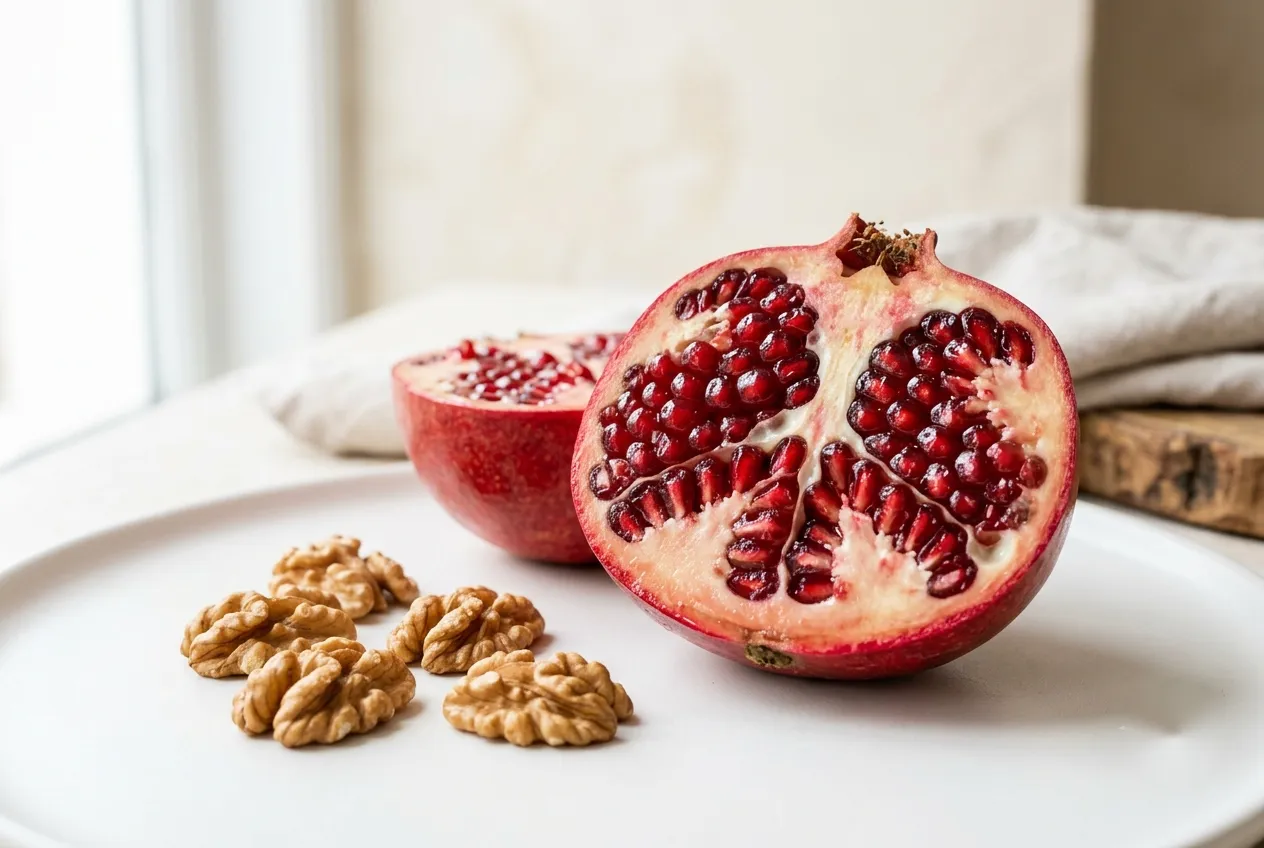
Urolithin A is interesting because it targets that cleanup process directly. It is not a stimulant and it is not a vitamin. It is a compound your gut is supposed to make from foods like pomegranate and walnuts, except many people cannot make much of it at all.
The marketing around it runs hot, the way it always does with anything the longevity field gets excited about. The human data is real but narrower than the headlines suggest, and worth looking at honestly.
What Is Urolithin A?
Urolithin A is a metabolite, meaning your body produces it from something you eat rather than absorbing it ready-made. The raw materials are ellagitannins, compounds found in pomegranates, walnuts, raspberries, and strawberries. When those reach your gut, certain bacteria break them down through several steps, and the end product is urolithin A.
Here is the catch that makes supplementation worth considering. The conversion depends entirely on having the right microbes, and a large share of people simply do not. Estimates suggest only around 30 to 40 percent of people host a gut community that produces meaningful amounts. Everyone else can eat pomegranate every day and end up with almost none. A supplement skips the gut lottery and delivers the finished compound.
What urolithin A does once it is in you is the more important part. It triggers mitophagy, the process cells use to identify damaged mitochondria, dismantle them, and clear the parts for recycling. Mitophagy slows with age, which lets defective mitochondria accumulate. By nudging that housekeeping back into gear, urolithin A appears to improve the overall quality of the mitochondrial pool, the same energy machinery that CoQ10 feeds on the production side.
The Science Behind Urolithin A Benefits
Human research on urolithin A is recent and clusters around muscle and mitochondrial health. Three trials carry most of the weight, and they tell a fairly consistent story with one honest caveat.
A safety record and a real mitochondrial signal
Before anyone could claim a benefit, the basic questions were whether it is safe and whether it actually does anything measurable inside the body. The first proper human trial answered both.
- The Evidence: A randomized, double-blind, placebo-controlled first-in-human trial published in Nature Metabolism gave sedentary older adults urolithin A at 500 mg, 1,000 mg, or placebo for four weeks. It was safe and well tolerated at every dose. More telling, muscle biopsies showed that the 1,000 mg dose significantly shifted the expression of mitochondrial genes, including those tied to mitophagy, and blood acylcarnitine levels changed in a pattern that points to improved mitochondrial function.
- Read the study: The mitophagy activator urolithin A is safe and induces a molecular signature of improved mitochondrial and cellular health in humans
This did not prove anyone got stronger. It proved the compound reaches the muscle and changes the machinery in the direction the theory predicts, which is the necessary first step.
Better muscle endurance in older adults
The follow-up question was whether that molecular signal translates into something a person can feel or measure in their own body. The clearest answer so far is about endurance, how long a muscle can keep contracting before it gives out.
- The Evidence: A randomized clinical trial of 66 adults aged 65 to 90, published in JAMA Network Open, tested 500 mg and 1,000 mg of urolithin A against placebo over four months. The headline target, distance walked in six minutes, did not improve significantly. But muscle endurance did: participants taking urolithin A managed significantly more contractions before fatigue in both a hand muscle and a leg muscle, and their blood markers of mitochondrial health and inflammation, including C-reactive protein, dropped.
- Read the study: Effect of Urolithin A Supplementation on Muscle Endurance and Mitochondrial Health in Older Adults
Notice what missed. The primary endpoint, the six-minute walk, came back flat. The endurance and biomarker results were secondary findings. That is a genuinely positive signal, but it is the kind that needs replication before anyone calls it settled, and the researchers said as much.
Strength and exercise performance in middle age
Older, frailer people are one population. The more interesting question for most readers is whether a healthy middle-aged body responds too. One four-month trial suggests it does.
- The Evidence: The ATLAS trial, published in Cell Reports Medicine, randomized 88 overweight, untrained middle-aged adults to 500 mg of urolithin A, 1,000 mg, or placebo for four months. The supplement groups gained roughly 12 percent in muscle strength compared with their starting point, improved measures of aerobic endurance, and again showed reductions in plasma acylcarnitines and C-reactive protein, both signs of more efficient mitochondria and less inflammation.
- Read the study: Urolithin A improves muscle strength, exercise performance, and biomarkers of mitochondrial health in a randomized trial in middle-aged adults
A 12 percent strength gain over four months in untrained people is notable, though it is worth remembering these were people with room to improve, and the trial was run by researchers connected to the product. The biomarker changes lining up across three separate studies is the part that makes the whole picture more convincing than any single result.
A Practical Guide: How to Use It
The good news is that the practical side is simple, because nearly every trial used the same compound and a narrow dose range.
The studies that worked used either 500 mg or 1,000 mg a day. Most commercial products, including the one most of this research was conducted on, are built around the 500 mg daily dose, which is the amount that moved muscle and mitochondrial markers in the trials. There is no compelling reason for a healthy person to push to 1,000 mg, since 500 mg already produced effects.
Urolithin A is fat soluble, so take it with a meal that has some fat in it to help absorption. Timing across the day does not appear to matter. What matters far more is consistency over months. This is not creatine, where stores saturate in a few weeks. The muscle trials ran two to four months before measuring anything, so treat it as a slow project and give it at least that long before judging whether it does anything for you.
One more practical point. Because most people convert dietary ellagitannins poorly, eating more pomegranate or walnuts is a reasonable habit but a weak substitute for the supplement if your gut is in the non-producing majority. The whole appeal of supplementing is bypassing that bottleneck.
Safety and Advice
Urolithin A has a clean early safety record. The first-in-human trial found it well tolerated up to 1,000 mg a day, and the longer four-month trials reported no serious adverse events, with side effects no more common than placebo. The most that turned up was the occasional mild digestive complaint.
A few sensible cautions still apply. The long-term safety data, meaning years rather than months, does not exist yet simply because the compound is new to human use. People who are pregnant or breastfeeding should skip it, since there is no safety data for them. And if you take medication or have a chronic condition, run it past your doctor first, as you would with anything that measurably changes mitochondrial and inflammatory markers.
The Bottom Line
Urolithin A is one of the more credible entries in the longevity category, mostly because it comes with actual randomized human trials instead of mouse data and hope. The honest read is that it modestly improves muscle endurance and strength and consistently nudges mitochondrial biomarkers in a good direction, while the bigger functional wins, like walking farther, have not landed yet.
If you are over 50, training and not recovering the way you used to, or you suspect you are in the gut-bacteria majority that makes little of it on your own, it is a reasonable thing to try at 500 mg a day with food for three to four months. Pair it with the obvious foundation, since creatine and resistance training still do more for muscle than any single capsule, and judge it on how you feel and perform after a full season, not a week.
This article is for educational purposes only and is not medical advice. Supplements can interact with medications and health conditions, so talk to a qualified healthcare provider before starting anything new.
Common questions
How much urolithin A should I take?
Human trials used 500 mg or 1,000 mg a day. The 500 mg dose is the one most products are built around and it moved muscle and mitochondrial markers in the studies.
How long does urolithin A take to work?
The muscle trials ran for two to four months before measuring changes. This is a slow, cumulative supplement, not something you feel the same day.
Can I just eat pomegranates instead of supplementing?
Only some people do. Your gut bacteria have to convert the ellagitannins in pomegranate, walnuts, and berries into urolithin A, and many people lack the right microbes. A supplement delivers the finished compound directly.
Is urolithin A safe?
The first human trial found it safe and well tolerated at up to 1,000 mg a day for four weeks, and longer trials reported no serious issues. Data in pregnancy is limited, so check with a doctor first.