Spermidine Benefits Start With a Cellular Cleanup Program
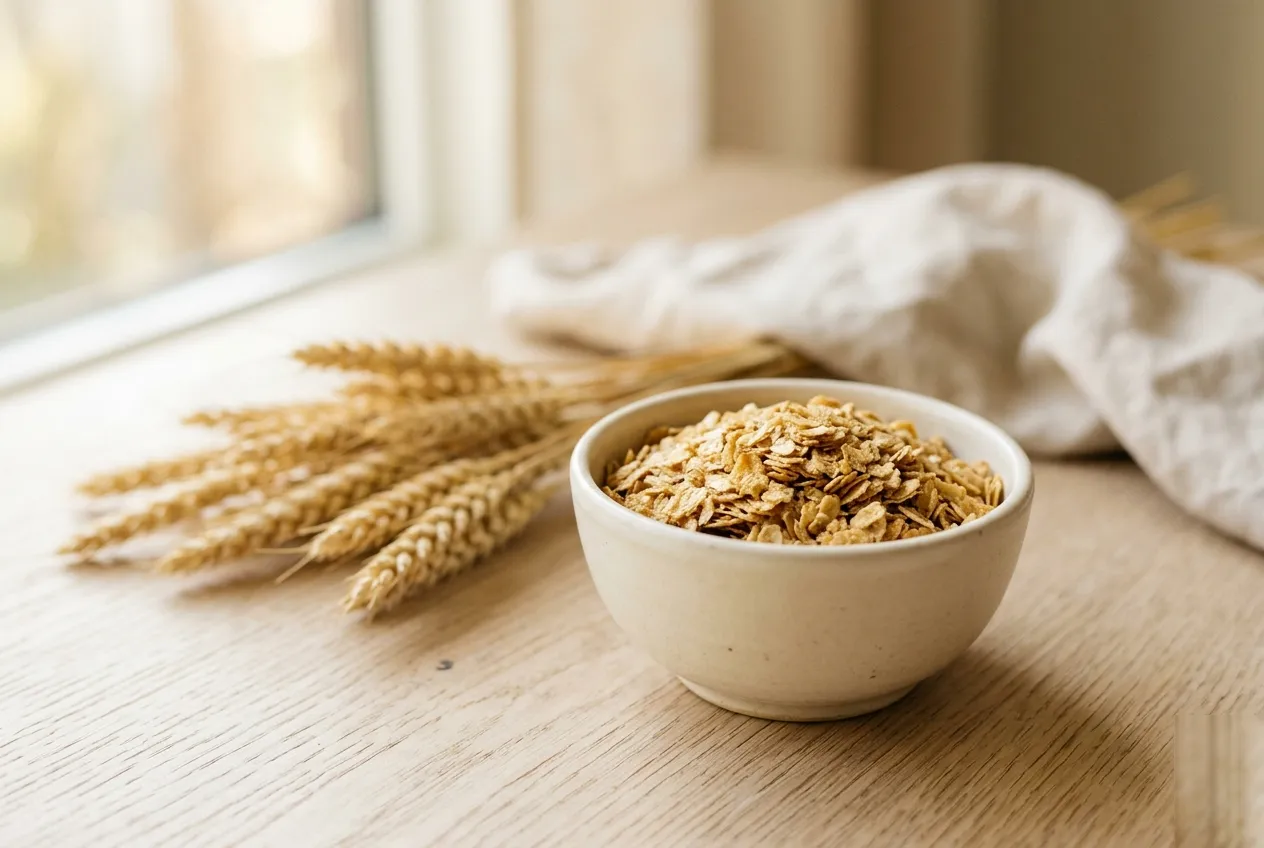
Most claims about spermidine benefits trace back to a single unglamorous process your cells run to stay healthy: they take out their own trash. That process is called autophagy, and it slows down as you age, letting damaged proteins and worn-out cell parts pile up. Spermidine is one of the few compounds shown to switch it back on.
It is not a vitamin, a stimulant, or a herb. Spermidine is a polyamine, a small molecule your own cells make and that shows up in food, with especially high amounts in wheat germ, aged cheese, mushrooms, and soybeans. Your body’s own production falls with age, which is the whole reason the longevity field keeps circling back to it.
The excitement runs ahead of the human data, as it usually does. The mechanism is genuinely compelling and the population studies are striking, but the controlled trials in people are thinner and messier than the headlines let on. Here is the honest version.
What Is Spermidine?
Spermidine is a naturally occurring polyamine, a class of molecules built from amino acid building blocks that every living cell needs to grow, divide, and repair itself. It was first isolated from semen, which is where the name comes from, but it is present throughout the body and in most whole foods.
Its headline job is inducing autophagy, from the Greek for “self-eating.” Think of it as a scheduled cleanup crew. When autophagy is working, cells identify broken components, break them down, and recycle the raw materials. When it stalls, the debris accumulates, and that buildup is one of the recognized hallmarks of aging. Spermidine appears to act as a signal that tells the cleanup crew to get moving.
This puts it in the same conceptual neighborhood as urolithin A, which targets the recycling of worn-out mitochondria specifically. Spermidine works one level up, on the cell’s general housekeeping rather than one organelle. The two are often mentioned together, but they are not the same tool.
Two facts make supplementation worth considering. Your internal spermidine levels decline with age, and dietary intake varies enormously from person to person depending on what you eat. A diet heavy in wheat germ and aged cheese delivers far more than a typical modern one.
The Science: Which Spermidine Benefits Hold Up?
Spermidine has been studied in cells, in mice, in large human populations, and in a handful of small clinical trials. The evidence gets weaker as you move from the petri dish toward the randomized human trial, so it pays to know which is which.
The autophagy and longevity mechanism
This is the foundation everything else rests on, and it is where the animal evidence is strongest. Spermidine reliably extends lifespan in yeast, worms, flies, and mice, and the effect depends on autophagy being intact.
- The Evidence: A landmark paper in Nature Medicine showed that feeding spermidine extended lifespan in mice and protected the aging heart, reducing cardiac hypertrophy and preserving function. When the researchers used mice genetically unable to run autophagy in heart cells, the protection vanished, which pins the benefit directly on the cleanup process rather than some side effect.
- Read the study: Cardioprotection and lifespan extension by the natural polyamine spermidine
The caveat matters: this is mouse data. Lifespan extension in a mouse is a reason to keep studying a compound, not proof it does the same in people. But the mechanism is clean, and it sets up the human observations that follow.
A cardiovascular and mortality signal in large populations
If spermidine protects the aging heart in mice, the obvious question is whether people who eat more of it live longer. The strongest human data here is observational, meaning it tracks what people already eat rather than assigning them a supplement.
- The Evidence: The Bruneck study, published in The American Journal of Clinical Nutrition, followed 829 Italian adults for two decades with repeated dietary assessments. Higher spermidine intake tracked with lower all-cause mortality, falling from about 40 deaths per 1,000 person-years in the lowest-intake third to 15 in the highest. The adjusted hazard ratio was 0.76 per standard deviation of higher intake, and the gap between the top and bottom thirds was comparable to being 5.7 years younger. The link held up in a separate Austrian cohort.
- Read the study: Higher spermidine intake is linked to lower mortality: a prospective population-based study
That is a large and consistent association, but keep the word “association” front of mind. People who eat lots of spermidine-rich foods also tend to eat more whole grains, legumes, and vegetables, and no statistical adjustment fully separates the molecule from the diet around it.
Blood vessel function in an actual human trial
Observational data can only take you so far. The more useful question is what happens when you deliberately raise spermidine and measure something concrete. One randomized trial did exactly that with vascular function.
- The Evidence: A randomized, placebo-controlled trial published in a peer-reviewed American Heart Association journal raised polyamine production in the gut and found improved endothelial function, the ability of blood vessels to dilate properly, which is an early marker of cardiovascular health. It lines up with the mouse work showing spermidine restores nitric oxide signaling in aging arteries.
- Read the study: Endothelial Function is improved by Inducing Microbial Polyamine Production in the Gut: A Randomized Placebo-Controlled Trial
This is a real controlled result in humans, which is why heart health is the benefit with the most credible human backing so far. It is one trial, not a stack of them, so treat it as promising rather than settled.
Memory: a promising pilot the bigger trial could not confirm
Because autophagy matters in brain aging, spermidine has been tested for memory, and this is where honesty is most important, because the story does not have a tidy ending.
- The Evidence: A small three-month pilot trial in Cortex gave 30 older adults with subjective cognitive decline a spermidine-rich wheat germ extract, and memory performance improved moderately versus placebo. Encouraging. But the same group ran a larger, longer follow-up, the SmartAge trial in JAMA Network Open, with 100 participants over 12 months, and spermidine improved neither memory nor brain biomarkers compared with placebo.
- Read the study: The effect of spermidine on memory performance in older adults at risk for dementia: A randomized controlled trial
- Read the study: Effects of Spermidine Supplementation on Cognition and Biomarkers in Older Adults With Subjective Cognitive Decline: A Randomized Clinical Trial
When a small positive pilot is followed by a larger, better-powered null result, the larger one usually deserves more weight. So the fair read is that spermidine did not deliver a cognitive benefit in the best trial we have. Anyone selling it as a memory pill is ahead of the evidence.
A Practical Guide: How to Use It
The confusing part is the dose, so start there. The trials that found anything used a wheat germ extract delivering roughly 1 mg of actual spermidine per day. That number is easy to misread on a label. A product listed as “500 mg” almost always means 500 mg of wheat germ extract, which contains only a few milligrams of spermidine at most. Read the supplement facts for the spermidine content, not the extract weight, and do not assume more extract means a dramatically bigger dose of the active compound.
Most commercial products, including wheat germ capsules, aim to provide somewhere in the low single digits of milligrams of spermidine daily. There is no strong evidence that pushing far beyond the studied intake does more, so matching the food-and-trial range of a few milligrams a day is the sensible target.
Timing does not appear to matter much. Taking it with food is reasonable and easy on the stomach. What matters far more is consistency over months, since autophagy is a slow background process and the trials measured outcomes over quarters and years, not weeks.
You can also just eat for it. Wheat germ, aged cheeses, mushrooms, natto and other soy foods, and legumes are all rich sources, and a diet built around them is a legitimate alternative to a capsule, with the bonus of everything else those foods bring.
Safety and Advice
Spermidine has a reassuring safety profile in the trials to date. The cognitive studies specifically assessed safety and tolerability and reported it was well tolerated at the doses used, with side effects no more common than placebo. Because it occurs naturally in ordinary food, most people already consume it daily without issue.
A few cautions still apply. The long-term safety of concentrated supplements over many years has not been established, simply because this is a newer supplement category. The wheat germ source is worth flagging for anyone with celiac disease or a wheat allergy, who should pick a certified gluten-free product or skip it. People who are pregnant or breastfeeding should avoid it for lack of safety data, and anyone on medication or managing a chronic condition should check with a doctor first, the same standard you would apply to any longevity compound that changes cellular processes.
The Bottom Line
Spermidine sits on a genuinely interesting mechanism, autophagy, with strong animal lifespan data and a large, consistent human association with lower mortality and better heart health. What it lacks so far is the pile of positive randomized human trials that would move it from promising to proven, and its best cognitive trial came back empty.
If you want to try it, the low-risk approach is either eating more spermidine-rich foods or taking a wheat germ product that delivers a few milligrams of spermidine a day, with food, for at least a few months, and treating it as a long-term bet rather than something you will feel. Buy it for the mechanism and the cardiovascular signal, not for promises the trials have not yet kept.
This article is for educational purposes only and is not medical advice. Supplements can interact with medications and health conditions, so talk to a qualified healthcare provider before starting anything new.
Common questions
How much spermidine should I take?
The human trials used roughly 1 mg of actual spermidine a day from a wheat germ extract. Read the label carefully, because a product listed as 500 mg is usually 500 mg of wheat germ extract, not 500 mg of spermidine. Most supplements aim to deliver a few milligrams of spermidine per serving.
Is spermidine from wheat germ safe if I am gluten sensitive?
Spermidine itself is not gluten. But wheat germ extracts can carry trace gluten, so anyone with celiac disease or a diagnosed wheat allergy should choose a certified gluten-free product or avoid it and ask a doctor first.
How long does spermidine take to work?
This is a slow, preventive compound, not something you feel. The trials ran three to twelve months before measuring anything, and its main proposed benefit, autophagy, is a background process. Judge it over months, not days.
Who should not take spermidine?
People who are pregnant or breastfeeding should skip it, since there is no safety data for them. Anyone with a wheat allergy or celiac disease should avoid wheat germ versions. If you take medication or have a chronic condition, clear it with your doctor first.